-
July 16, 2026
Operational Excellence: How BPM Drives Continuous Improvement
Learn more

Manufacturing digital transformation guide: IIoT, MES, analytics, robotics, and BPM technologies. Phased approach from foundation to innovation. Real example: 30% conversion improvement. Success factors, common obstacles, metrics framework for measuring ROI.
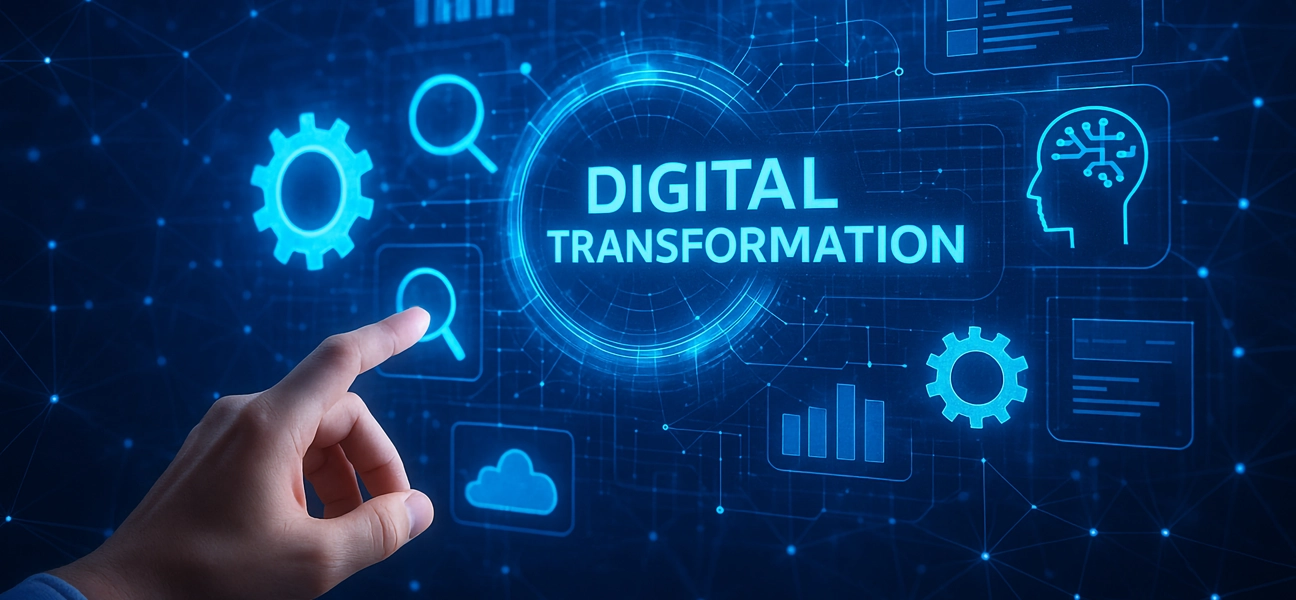
Manufacturing faces mounting pressure from every direction. Customer expectations for customisation and rapid delivery increase. Supply chain disruptions expose vulnerabilities. Labour shortages make operational efficiency critical. Competitors adopting digital technologies gain cost and speed advantages.
Digital transformation addresses these challenges by connecting previously siloed systems, automating manual processes, and enabling data-driven decision making across production, supply chain, quality, and maintenance operations.
But "digital transformation" means different things to different people. For some, it's installing sensors on machines. For others, it's implementing ERP systems. In reality, successful digital transformation in manufacturing requires a coordinated approach connecting technology, processes, and people to deliver measurable business outcomes.
This guide cuts through the buzzwords to explain what digital transformation actually means for manufacturers, which technologies enable it, how to implement it in phases, and how to measure success.
Digital transformation in manufacturing is the systematic adoption of digital technologies to fundamentally improve how products are designed, produced, delivered, and supported—resulting in measurable improvements in cost, quality, speed, and flexibility.
What it's not: Simply digitising existing processes. Taking a paper form and making it a PDF isn't transformation—it's digitalisation. Transformation means rethinking how work gets done, enabled by technology.
What it is: Connecting data across the value chain to enable better decisions and faster execution. Production schedules automatically adjust based on real-time demand. Quality issues trigger immediate corrective actions. Maintenance happens before equipment fails, not after.
The manufacturing context: Unlike office environments where digital transformation primarily affects information work, manufacturing transformation spans both physical and digital domains. Machines, materials, and products are physical. But decisions about what to produce, how to produce it, and when to maintain equipment are increasingly data-driven.

External forces make digital transformation necessary, not optional.
Shift: From mass production of standard products to mass customisation of personalised variants.
Impact: Traditional production planning can't handle hundreds of product variants efficiently. Manual scheduling breaks down. Digital systems enable dynamic planning and flexible production.
Example: Automotive manufacturers now offer thousands of configuration options. Coordinating this complexity requires digital systems connecting customer orders directly to production schedules, supply chain, and quality control.
Shift: From stable, predictable supply chains to frequent disruptions requiring rapid response.
Impact: Static planning assumptions (lead times, supplier reliability, transportation costs) no longer hold. Manufacturers need real-time visibility and dynamic replanning capabilities.
Example: Component shortage affects production line. Digital systems immediately identify alternative suppliers, calculate cost impacts, revise production schedules, and notify customers of delivery changes—in hours, not days.
Shift: From abundant skilled labour to chronic shortages and high turnover.
Impact: Manufacturers can't rely on tribal knowledge residing in experienced workers' heads. Processes must be documented, standardised, and automated where possible.
Example: Quality inspection traditionally required experienced inspectors. Computer vision systems now perform consistent inspection 24/7, freeing humans for exception handling and continuous improvement.
Shift: From sustainability as nice-to-have to mandatory reporting and customer requirements.
Impact: Manufacturers must track energy consumption, waste generation, and carbon emissions across operations. Manual tracking is impractical. Digital systems provide automated measurement and reporting.
Example: Major customers require suppliers to report carbon footprint by product. Manufacturers without digital tracking systems can't comply and lose business.
Digital transformation isn't one technology—it's the integration of several.
What it does: Sensors on machines collect operational data (temperature, vibration, speed, pressure, output) and transmit to central systems for analysis.
Business value: Real-time visibility into machine performance, early warning of failures, optimisation opportunities.
Typical applications:
Reality check: IIoT generates massive data volumes. Value comes from analysis and action, not just collection. Many manufacturers collect data they never use.
What it does: Manages production execution on the shop floor—scheduling, tracking, quality control, material consumption, labour reporting.
Business value: Bridges gap between planning systems (ERP) and physical production. Provides real-time production status, quality data, and performance metrics.
Typical applications:
Integration critical: MES value depends on integration with ERP (planning), PLM (product data), and quality systems. Standalone MES provides limited benefit.
What it does: Analyses production data to identify patterns, predict outcomes, and optimise parameters beyond human capability.
Business value: Finds improvement opportunities invisible to human analysis. Optimises complex processes with hundreds of variables.
Typical applications:
Prerequisites: Requires clean, structured data. Many manufacturers must improve data quality before advanced analytics deliver value.
What it does: Creates virtual replica of physical production system. Simulates changes before implementing them physically.
Business value: Test production changes, process improvements, and new product introductions virtually—reducing risk and accelerating implementation.
Typical applications:
Maturity requirement: Digital twins require significant investment and sophisticated modelling. Start with simpler technologies before pursuing digital twins.
What it does: Robots designed to work alongside humans safely, handling repetitive or ergonomically challenging tasks.
Business value: Increases productivity, improves safety, enables 24/7 operation, addresses labour shortages.
Typical applications:
Human complement: Cobots handle repetitive work. Humans handle judgement, problem-solving, and continuous improvement. Both together deliver better results than either alone.
What it does: Automates business processes across departments—order-to-cash, procure-to-pay, production planning, quality management, change control.
Business value: Eliminates manual handoffs, enforces consistent procedures, provides visibility, maintains audit trails.
Typical applications:
Often overlooked: Manufacturers focus on production floor technology whilst manual processes in planning, quality, and supply chain create bottlenecks. Business process automation delivers quick wins with lower implementation risk than shop floor systems.
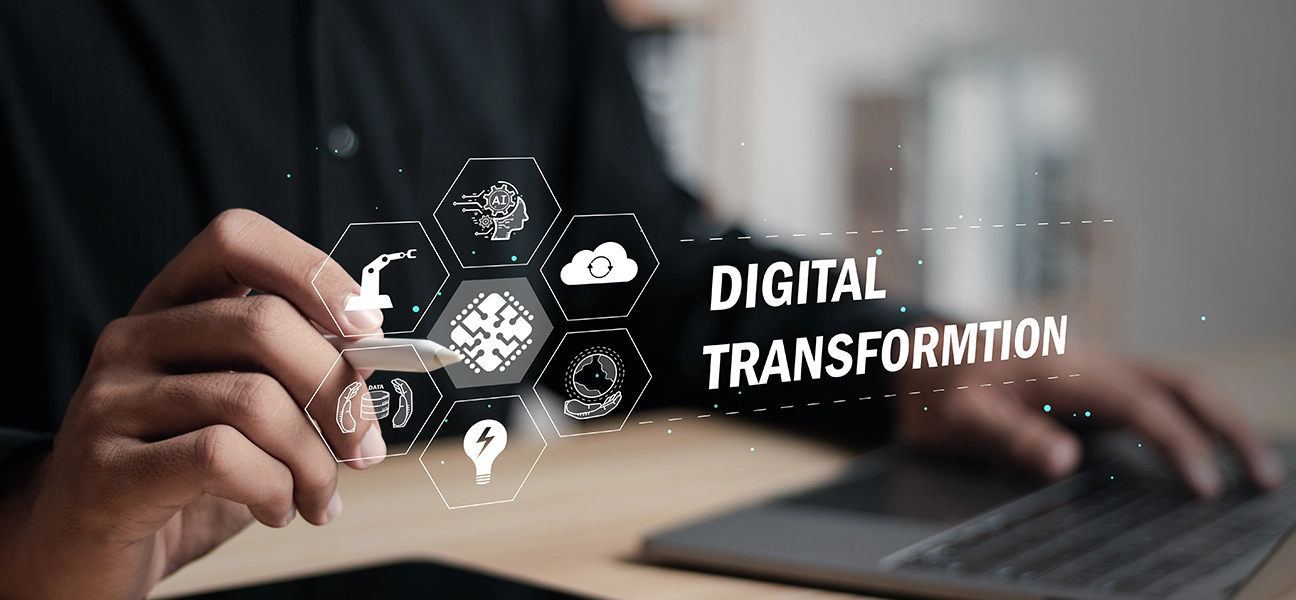
Industry 4.0 provides a framework for understanding manufacturing digital transformation.
Core principles:
The four industrial revolutions:
Practical interpretation: Industry 4.0 isn't about specific technologies. It's about creating interconnected, intelligent systems that enable faster, more flexible, higher-quality production with less waste.
Attempting everything simultaneously overwhelms organisations. Successful manufacturers implement in phases.
Objectives: Establish data infrastructure and baseline metrics.
Activities:
Deliverables: Real-time production visibility, baseline performance data, initial quick wins.
Technologies: Basic IIoT sensors, simple dashboards, workflow automation for targeted processes.
Success indicator: Everyone can see real-time production status. Baseline metrics are trusted and used in daily meetings.
Objectives: Use data to improve operations and reduce waste.
Activities:
Deliverables: Measurable improvements in OEE, quality, and cost.
Technologies: Advanced analytics, MES integration, expanded automation.
Success indicator: Demonstrable ROI from Phase 1 investments. Organisation eager for Phase 3.
Objectives: Create end-to-end digital thread from customer order to delivery.
Activities:
Deliverables: Fully integrated operations with end-to-end visibility.
Technologies: Comprehensive MES, advanced planning systems, supply chain platforms.
Success indicator: Order-to-delivery cycle time reduced 30-50%. Customer satisfaction improved measurably.
Objectives: Leverage digital capabilities for new business models and competitive advantages.
Activities:
Deliverables: Capabilities competitors can't easily replicate.
Technologies: Digital twins, AI/ML, advanced robotics, new business model platforms.
Success indicator: Capabilities enable offerings or efficiencies unavailable to competitors.
Technology enables transformation. But success depends on non-technical factors.
Why critical: Digital transformation requires investment, organisational change, and patience through implementation challenges. Without executive commitment, initiatives stall when difficulties arise.
What it looks like: CEO or COO actively sponsors initiative. Discusses progress in management meetings. Provides budget and resources. Removes obstacles.
Red flag: "IT project" without business executive ownership. These initiatives rarely deliver business value.
Why critical: Manufacturing transformation spans production, quality, maintenance, planning, supply chain, engineering. Siloed implementation creates disconnected point solutions.
What it looks like: Cross-functional steering committee. Shared objectives. Regular communication. Willingness to change established workflows.
Red flag: Each department implementing separate systems without coordination. Results in data silos and manual integration.
Why critical: Technology changes how people work. Without support, people resist or work around systems.
What it looks like: 30-40% of project budget allocated to training, communication, and support. Early wins celebrated. Resistors engaged, not ignored.
Red flag: "We'll train users after go-live." Recipe for poor adoption and wasted investment.
Why critical: Attempting full-scale transformation simultaneously risks failure and organisational burnout.
What it looks like: Pilot on one production line or one process. Prove value. Learn lessons. Scale to similar areas rapidly based on proven template.
Red flag: "We'll deploy to all 10 facilities simultaneously." High risk of failure.
Why critical: Without clear metrics, can't prove value or identify problems early.
What it looks like: Baseline metrics before implementation. Target improvements defined. Regular measurement and review. Course correction based on data.
Red flag: "We'll measure success after implementation." Usually means never measuring properly.

Expect these challenges. Plan mitigation strategies.
Problem: Older machines lack digital interfaces. Can't collect data without expensive retrofits.
Solution: Retrofit sensors and edge computing devices. Often cheaper than replacing equipment. Provides 80% of new equipment benefits at 20% of cost.
Problem: Information Technology (IT) and Operational Technology (OT) teams have different priorities, security models, and technology stacks.
Solution: Create joint governance structure. Establish security protocols acceptable to both. Start with limited, controlled integration points and expand gradually.
Problem: "Garbage in, garbage out." Poor master data, inconsistent naming, missing information undermines analytics.
Solution: Data quality improvement project before advanced analytics. Establish data governance. Automate data validation where possible.
Problem: Existing workforce lacks skills for new technologies. Hiring digital talent into manufacturing locations difficult.
Solution: Combination of upskilling existing employees, selective hiring, and partnerships with technology vendors for ongoing support.
Problem: Connecting production systems to networks creates cyber risk. Ransomware affecting production is catastrophic.
Solution: Network segmentation, strong authentication, regular security audits, incident response plans. Don't let security prevent transformation, but don't ignore it either.
Track these metrics to demonstrate value.
Overall Equipment Effectiveness (OEE):
Cycle Time Reduction:
Quality Improvements:
Inventory Reduction:
Labour Productivity:
Energy Efficiency:
Overall Cost Per Unit:
Return on Digital Investment:
Customer Satisfaction:
Time-to-Market:
Flexibility:
Challenge: Retailer faced quality issues and slow production changeovers affecting ability to meet customer demand whilst maintaining profitability.
Solution: Comprehensive digital transformation including:
Results:
Key success factor: Phased approach starting with highest-impact processes, proving value, then scaling to broader operations.
Digital transformation in manufacturing isn't optional anymore. Competitive dynamics, customer expectations, supply chain volatility, and labour challenges make it necessary for survival.
The question isn't whether to transform. It's how to transform effectively whilst maintaining production, managing risk, and delivering measurable ROI.
Successful manufacturers:
The path forward:
The manufacturers thriving five years from now are the ones starting their transformation journey today. Not attempting everything simultaneously. Not waiting for perfect conditions. But systematically building digital capabilities that deliver measurable business results.
Technology enables transformation. Strategy guides it. Execution determines success.
Start with one process. Prove value. Build momentum. Scale methodically.
That's how manufacturers turn digital transformation from buzzword into competitive advantage.
Insights on process automation, product updates, and what's happening at Emakin
Süreç yönetimi, ürün geliştirmeleri ve Emakin'deki güncel gelişmeler

Emakin is a low-code platform that helps businesses quickly design, automate, and manage their business processes effortlessly.





Emakin, kurumların iş süreçlerini daha hızlı, kontrollü ve verimli şekilde yönetmesine olanak tanıyan bir low-code BPM platformudur.