-
July 16, 2026
Operational Excellence: How BPM Drives Continuous Improvement
Learn more

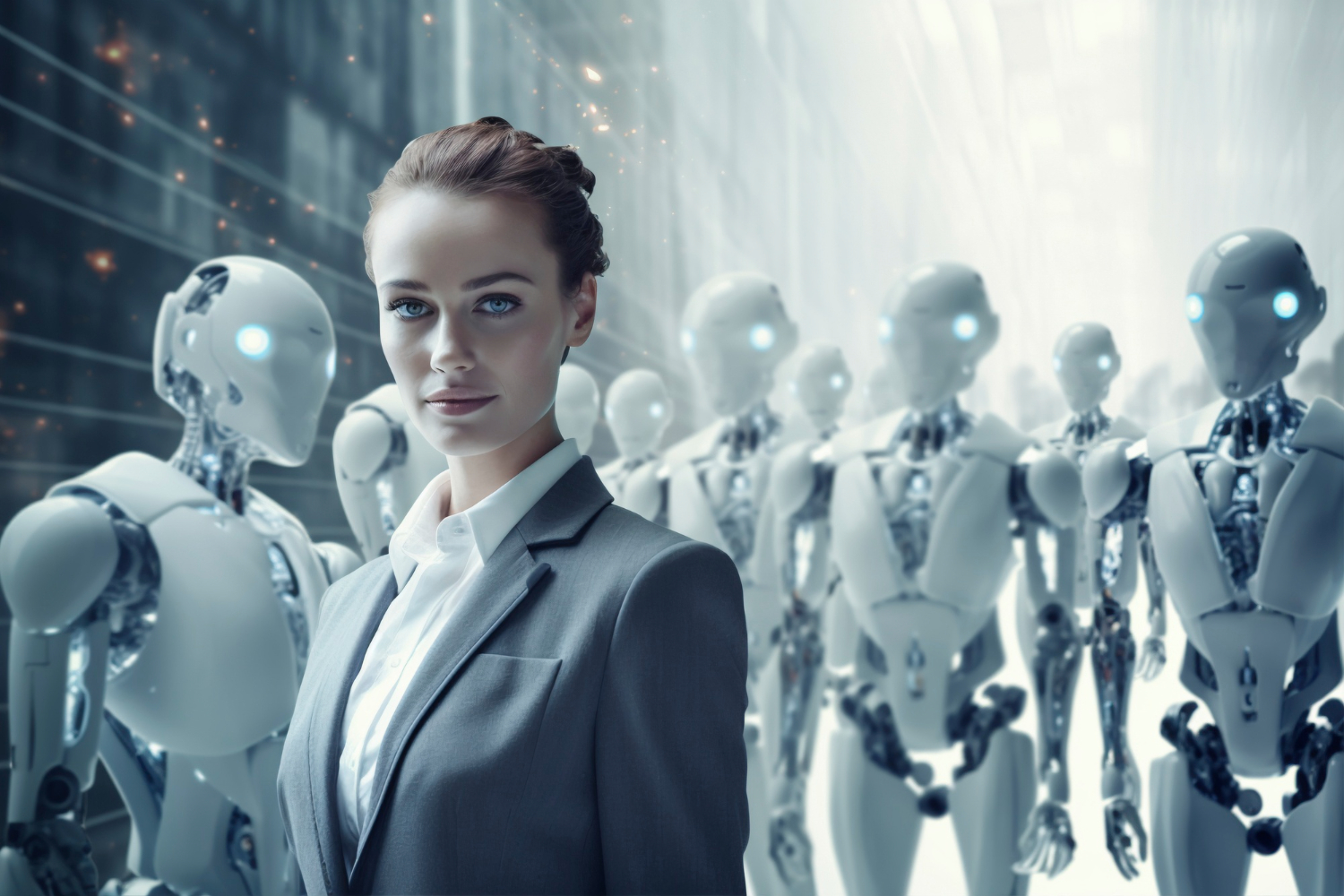
Explore the company model of 2030, where humans lead and AI operates. Discover how intelligent processes, integrated digital backbones and governed automation are reshaping organisational design and competitive advantage.
Not long ago, a CEO made a striking observation:
“We still rely on people to run processes. Our competitors rely on processes to guide people.”
That distinction captures the essence of the company model emerging towards 2030.
Over the past two decades, organisations have invested heavily in digital transformation. ERP systems were implemented, CRM platforms deployed, and business process management tools adopted. Yet in many companies, operations remain fundamentally human-driven. Processes may be visible in systems, but people still chase approvals, compile reports, reconcile data and manually bridge gaps between departments.
As we move towards 2030, this model is quietly reversing.
People will no longer run operations.
Systems — increasingly powered by artificial intelligence — will.
People will define direction, context and judgement.
This is not a distant forecast. It is already underway.
Traditional organisations are built around human-centred execution. A request arrives. Someone reviews it. Another approves it. Data is entered. Checks are performed. Emails are exchanged. Escalations occur. Every step depends on individual intervention.
That structure worked in a world of lower complexity and slower decision cycles. Today’s reality is different. Companies manage thousands of transactions, integrate dozens of systems and respond to real-time market shifts. The volume and velocity of information exceed what human coordination alone can sustainably handle.
The 2030 company does not eliminate people from this equation. Instead, it repositions them.
When a request enters the system, it is not merely recorded. It is analysed. Historical patterns are evaluated. Risk scores are calculated. Authorisation matrices are applied automatically. Exceptions are identified before they escalate.
Humans intervene not to push the process forward, but to oversee and refine it.
The shift is subtle yet profound: from operator to orchestrator.
The phrase “AI operates” can easily be misunderstood. It does not suggest that machines replace leadership or remove accountability. Rather, it reflects a change in how operational decisions are supported and executed.
Artificial intelligence excels at recognising patterns within large data sets. It can detect anomalies, forecast delays, assess risk probabilities and trigger predefined actions at speed. It ensures consistency and scalability across repetitive, rule-based activities.
Consider accounts receivable. Instead of simply tracking due dates, an AI-enabled system can assess customer payment history, sector trends and behavioural signals to predict late payment risk in advance. Finance teams then act proactively rather than reactively.
In procurement, a purchase request is no longer evaluated in isolation. The system can analyse supplier performance, budget consumption trends and similar historical requests before routing the approval. Managers receive contextualised insight rather than raw data.
In this model, humans still make strategic decisions. However, those decisions are informed by structured, real-time intelligence rather than fragmented spreadsheets and email threads.
AI accelerates execution. Humans provide judgement.
Most organisations today operate with relatively static processes. A workflow is designed, documented and deployed. Minor adjustments may follow, but the structure largely remains unchanged for years.
The 2030 company treats processes as living systems.
Performance is continuously measured. Bottlenecks are identified automatically. Unnecessary approval layers are highlighted. Variations across departments are analysed. The system does not merely execute the process; it evaluates it.
Where traditional automation increases speed, AI-enabled process management enhances adaptability. It suggests refinements. It anticipates friction. It supports continuous optimisation.
In this sense, the organisation becomes self-observing. It learns from its own data.
Such capability requires more than isolated tools. It depends on an integrated digital backbone — a process platform capable of orchestrating systems, data and decision logic in a governed environment.
The move towards AI-operated processes reshapes organisational design.
Hierarchies flatten as decision visibility increases. Middle management evolves from information relay to value creation. Departmental silos soften as processes flow end-to-end across a unified digital infrastructure.
A single customer order can simultaneously trigger credit risk analysis, stock validation, production planning and revenue forecasting — without manual coordination between teams. The connective tissue is no longer email; it is an integrated process architecture.
In this model, IT becomes a strategic architect rather than a support function. It designs the digital framework, ensures secure data governance and enables AI integration. Business units, within that governed structure, configure and refine workflows aligned with operational realities.
Speed and control are not opposites. When properly designed, they reinforce one another.
As organisations introduce AI into operational processes, governance becomes paramount.
Who has access to which data?
How are automated decisions logged?
Which model generated a recommendation?
Can changes be rolled back?
Is there transparency in authorisation rules?
Without clear governance, automation risks creating opacity rather than efficiency.
The 2030 company embeds governance by design. Role-based access control, audit trails, version management and testing environments are integral, not optional. Security and compliance are foundational components of the digital architecture.
The goal is not uncontrolled speed. It is controlled acceleration.
Organisations that continue to rely on manual approvals, spreadsheet-based tracking and email-driven coordination will not fail overnight. However, the competitive gap will widen.
Companies operating with AI-supported processes make decisions faster, reduce operational errors, lower costs and enhance customer responsiveness. Over time, this translates into structural advantage.
The next wave of competition will not be defined solely by product innovation. It will be defined by operational intelligence.
The question is no longer whether companies should adopt AI. It is whether they are prepared to redesign their operating model around it.
Paradoxically, the 2030 company model is not less human — it is more so.
By removing repetitive administrative burdens, organisations free people to focus on analysis, creativity and strategic thinking. Emotional intelligence, contextual understanding and ethical judgement remain distinctly human strengths.
When AI operates and humans lead, work becomes less about chasing tasks and more about shaping outcomes.
The transition to 2030 is not a technology purchase. It is an organisational decision. It requires rethinking how processes are designed, how authority is distributed and how data is trusted.
Ultimately, the defining question is simple:
Are people running your processes,
or are they guiding them?
The companies that answer the latter will define the next decade.
Insights on process automation, product updates, and what's happening at Emakin
Süreç yönetimi, ürün geliştirmeleri ve Emakin'deki güncel gelişmeler

Emakin is a low-code platform that helps businesses quickly design, automate, and manage their business processes effortlessly.





Emakin, kurumların iş süreçlerini daha hızlı, kontrollü ve verimli şekilde yönetmesine olanak tanıyan bir low-code BPM platformudur.